
Understand Degenerative Disc Disease
Degenerative Disc Disease
Degenerative disc disease is the wear and tear of the intervertebral discs, causing pain and limited movement.
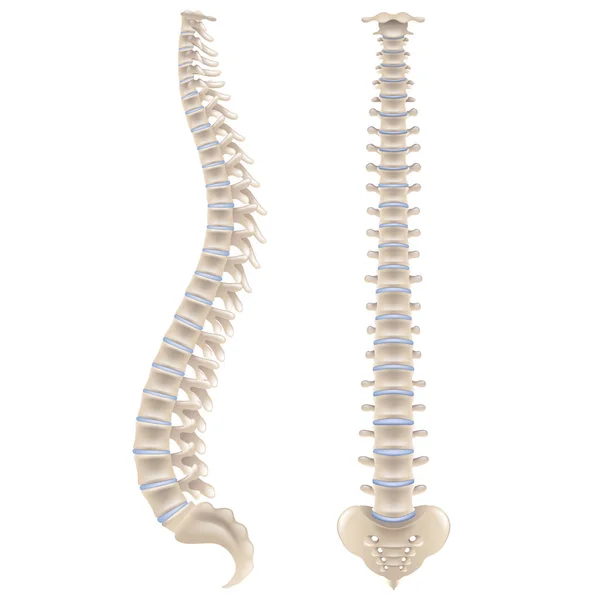
What is Degenerative Disc Disease?
Although common low back pain (backaches) can have multiple causes (muscular, ligamentous, articular, psychological), severe, chronic, and disabling low back pain in young individuals often has a disc origin. This is known as lumbar discopathy, which is the progressive degeneration of one or more intervertebral discs.
Evolution of Lumbar Spinal Stenosis
Discopathy can manifest as acute lumbar blockages (lumbago), which often appear after an incorrect movement or physical exertion. These episodes tend to disappear naturally within a few days, or, sometimes, a few weeks. For the majority of people, these episodes are isolated or spaced out over time. However, in 5% of cases, low back pain intensifies, occurring with increasingly smaller efforts, until it becomes permanent. The affected disc cracks, dehydrates, and gradually collapses. Sometimes, a fragment of the disc can be expelled, compressing the nerve roots located just behind: this is the phenomenon of a disc herniation, responsible, among other things, for sciatica pain in the legs. In some cases, a disc herniation appears suddenly at the beginning of the evolution of discopathy, in individuals who had never suffered from back pain. In other cases, the herniation appears after a long history of low back pain. The more compressed the disc is, the smaller the space around the nerve roots will be, and, in some cases, the simple removal of the disc herniation will not be sufficient to completely release a compressed root.

SYMPTOMS
Lumbar discopathy can cause two main types of symptoms: back pain (low back pain) and leg pain (sciatica or cruralgia). Simply put, disc degeneration causes low back pain, while disc herniation or protrusion can compress the nerve roots and cause sciatica. In cases of very compressed, protruded, or inflamed discs, sciatica may occur even without the presence of a herniation. Low back pain related to lumbar discopathy presents as a band-like pain in the lower part of the back. Sitting or standing for prolonged periods quickly becomes uncomfortable. The pains are sensitive to effort, often leading to a reduction in activities, whether sporting or professional. Morning pain and stiffness are common, requiring a period of ‘warming up’ before starting daily activities. In some people, the situation worsens with increased frequency, duration, and intensity of the episodes. The pain can become permanent, day and night, significantly affecting social and family life and potentially leading to feelings of frustration or depression. Sciatic pain is described in the paragraph about disc herniation.
TESTS
Lumbar discopathies are accurately diagnosed through a magnetic resonance imaging (MRI) of the lumbar spine, which is the most suitable exam to assess the state of the disc. Full spine X-rays are often important for the spine surgeon, providing a global view of the shape of the spine, which can influence the therapeutic decision. In cases where disc degeneration has already reached the stage of osteoarthritis, a computed tomography (CT) scan of the lumbar spine may be necessary to better evaluate the bony contours of the vertebrae.
Treatment Possibilities
Treatment Options for Degenerative Disc Disease
The treatment for low back pain is initially medical. It is managed by the attending physician, often in collaboration with a rheumatologist, a rehabilitation specialist, or a pain specialist. This treatment may include rest during episodes, analgesic and anti-inflammatory medications, physical therapy, and, in some cases infiltrations or immobilizations with braces. The majority of back pain cases respond well to these treatments, even if the episodes do not disappear completely. A more in-depth evaluation and a consultation with a spine surgeon are recommended when the pain does not respond adequately to treatments and the symptoms, persisting for more than 6 to 12 months, and/or significantly compromise the quality of life.
Principles of Surgical Treatment
Criteria for Degenerative Disc Disease Surgery
Surgery for chronic low back pain is only considered after the failure of a complete and prolonged medical treatment. The spine surgeon bases the decision for surgery on the correlation between symptoms and the abnormalities found on imaging exams. In cases without paralysis, surgery will never be mandatory, but rather an additional option to treat low back pain. Surgery consists of the total removal of the affected disc (including herniation, if present) and its replacement with a mobile implant (disc prosthesis) or definitive fixation (cage and screws for fusion/arthrodesis). The choice of implant depends on the degree of disc degeneration. After the onset of osteoarthritis, the placement of a disc prosthesis is no longer recommended.
One of the techniques I use most for the treatment of this pathology is the Lumbar Disc Prosthesis

Surgical Procedure
Lumbar Disc Prosthesis
The placement of a disc prosthesis is a surgical procedure that aims to replace a damaged intervertebral disc with an artificial prosthesis. This minimally invasive method allows the surgeon to restore the height of the intervertebral space and relieve pressure on adjacent nervous structures. Using advanced techniques and modern technology, the procedure provides pain relief and improved patient mobility. Recovery is generally fast, allowing patients to resume their daily activities with more comfort and functionality.
POST-OPERATIVE CARE
After surgery, the patient is encouraged to stand up a few hours after the procedure. A physical therapist teaches the proper movements for daily activities, such as standing up, lying down, and picking up objects from the floor. The use of a brace may be necessary in cases of arthrodesis, but not in surgeries involving a disc prosthesis. The return home usually occurs 24 to 48 hours after the intervention. Guidelines for wound care, medication, and rest until the follow-up appointment are provided upon hospital discharge.
CONVALESCENCE
At home, the ideal is to alternate rest in a comfortable position (semi-reclined, with legs slightly bent) with light walking on flat surfaces. Initially, these walks should last 10 to 15 minutes, and can gradually increase up to 1 or 2 hours. Daily activities, such as cleaning or driving, should only be resumed gradually starting from the 2nd or 3rd week, depending on the patient’s comfort.
Frequently Asked Questions
What is Degenerative Disc Disease?
It is a condition characterized by the progressive wear and tear of the intervertebral discs of the spine, which lose elasticity and shock-absorbing capacity, potentially causing pain and stiffness.
What are the most common symptoms?
Symptoms include lumbar or cervical pain, stiffness, limited movement, tingling or numbness in the limbs, and, in advanced cases, muscle weakness.
What are the causes of degenerative disc disease?
The main causes are natural aging, genetic predisposition, sedentary lifestyle, smoking, obesity, and activities that overload the spine.
How is the diagnosis made?
The diagnosis is made through clinical evaluation and imaging tests, such as X-rays and magnetic resonance imaging, which identify changes in the intervertebral discs.
What are the available treatment options?
Treatment may include physical therapy, strengthening exercises, analgesic and anti-inflammatory medications, and, in severe cases, surgery.
Is degenerative disc disease serious?
In most cases, it is not considered serious and can be managed with conservative treatment. However, in advanced cases, it can lead to complications that require medical intervention.
What is the difference between degenerative discopathy and disc herniation?
Degenerative discopathy refers to the wear and tear of the intervertebral disc, while disc herniation occurs when the disc material projects outwards, potentially compressing nervous structures.
Does drinking water prevent the dehydration of intervertebral discs?
There is no scientific evidence to prove that water intake prevents the dehydration of intervertebral discs.
Can degenerative disc disease worsen over time?
Yes, without proper treatment, the condition can progress, increasing pain and functional limitation.
Is surgery always necessary?
No. Surgery is only considered when conservative treatments do not provide adequate relief of symptoms or in cases of severe complications.