
Understand Adolescent Scoliosis
Adolescent Scoliosis
Adolescent scoliosis is an abnormal curvature of the spine that occurs during growth, which can cause discomfort and affect posture and aesthetics.
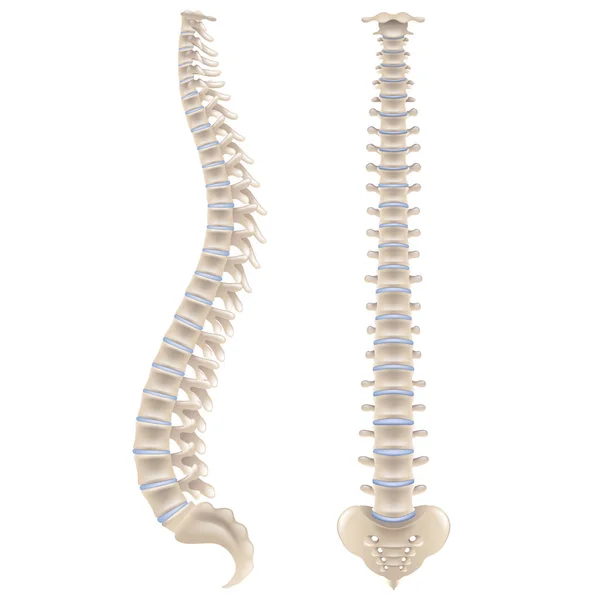
What is Adolescent Scoliosis?
Idiopathic scoliosis is a torsional deformation of the spine that usually develops in pre-adolescence and accentuates with growth.
Evolution of Adolescent Scoliosis
SYMPTOMS
Scoliosis deforms the spine, but rarely causes pain. Sometimes, the adolescent is not even aware of the deformity, which is only noticed by the people around them. In other cases, muscle pain or trunk asymmetries may indicate a spinal pathology and lead to the diagnosis. Simple idiopathic scoliosis does not carry a risk of paralysis.
TESTS
Scoliosis is easily diagnosed through X-rays of the entire spine. These X-rays allow for precise measurement of the curvature angle and are essential both for follow-up and for deciding on the need for surgical treatment. In cases of localized pain, a magnetic resonance imaging (MRI) can also be performed.
Treatment Possibilities
Treatment Options for Adolescent Scoliosis
Treatment for adolescent scoliosis is highly standardized, and decisions depend on the severity of the deformity, the age, and the stage of pubertal development. Frequently, upon diagnosis, a rehabilitation program with physical therapy is initiated to maintain spinal flexibility. Depending on the progression, the need to use a removable plastic brace, custom-molded, or, in more severe cases, to perform corrective surgery, which is never done before the end of growth, may be discussed.
Principles of Surgical Treatment
Criteria for Adolescent Scoliosis Surgery

Surgical Procedure
The Surgery
In most cases, the surgery is performed from the back of the spine. The procedure involves placing metal implants (osteosynthesis) that allow the spine to be aligned. Safety is enhanced by continuous monitoring of the spinal cord throughout the surgery. The implants correct the deformity and serve as support until bone fusion permanently stabilizes the spine. This technique, called Fusion or arthrodesis, involves blocking a part of the spine, whose mobility in a pathological position cannot be maintained.
The surgeon always finds the best compromise between the necessary blockage to correct the spine and the preservation of the greatest possible mobility. The lower intervertebral discs, being the most mobile ones, are generally preserved.
POST-OPERATIVE CARE
The first time the patient gets up occurs on the day after the surgery. The physical therapist teaches the appropriate movements for daily life, such as standing up, lying down, picking up objects from the floor, and performing personal hygiene. From the first day, the patient recovers a certain autonomy for these activities. A custom-molded plastic brace is necessary in the first weeks after surgery, being used only when moving. It is not necessary to use it when lying down. Discharge occurs between 4 to 7 days after the surgery, either directly home or to a rehabilitation center, where the patient will remain for 2 to 3 weeks.
CONVALESCENCE
At home, the ideal rhythm combines periods of rest in a comfortable position (semi-reclined, with the backrest inclined at 45º and the legs slightly bent) with light walking on flat surfaces, initially for 10-15 minutes, which can reach 1 or 2 hours.
In the first few days, intense activities should be avoided. Starting from the 2nd or 3rd week, it is possible to gradually resume daily activities, respecting the limits imposed by the body and pain.
Physiotherapy starts after the 3rd week, with massages on the scar and painful or tense areas, followed by exercises to stretch the body and strengthen the spine and lower limbs. Returning to school can be considered after 3 to 6 weeks, while returning to sports activities usually occurs after the 6th month.
In the long term, there are no specific contraindications, allowing the patient to lead an active life and practice sports normally.
Frequently Asked Questions
What is adolescent idiopathic scoliosis?
It is a lateral curvature of the spine that usually appears between the ages of $10$ and $18$, with no known cause. It is the most common type of scoliosis in adolescents.
What are the most common signs and symptoms?
The signs include asymmetrical shoulders or hips, a prominent scapula (shoulder blade), uneven waist, and, in some cases, back pain. Scoliosis is often painless and detected in routine examinations.
How is the diagnosis made?
The diagnosis is made through physical examination and confirmed with X-rays that measure the Cobb angle, determining the severity of the curvature.
What are the available treatment options?
Treatment depends on the severity of the curve and the adolescent’s growth stage. It may include observation, the use of orthopedic braces to prevent progression, and, in severe cases, surgery for curvature correction.
Can adolescent idiopathic scoliosis worsen over time?
Yes. During periods of accelerated growth, the curvature can progress rapidly, making regular medical follow-up essential.
Is surgery always necessary?
No. Most cases can be managed with observation or the use of braces. Surgery is considered when the curvature is greater than 45-50 degrees and is progressing.
Does scoliosis affect girls or boys more?
Adolescent idiopathic scoliosis is more common in girls, especially in cases that require treatment.
Can heavy backpacks cause scoliosis?
Heavy backpacks do not cause scoliosis, but they can worsen back pain and inadequate postures. It is recommended that the weight of the backpack does not exceed $10\%$ of the adolescent’s body weight.
Can scoliosis be prevented?
Since the cause of idiopathic scoliosis is unknown, there are no specific preventive measures. However, early detection and regular follow-up can prevent the progression of the curvature.
Does adolescent idiopathic scoliosis affect daily life?
In most mild cases, there is no significant impact. In more severe cases, it can affect self-esteem, cause physical discomfort, and limit some physical activities.