
Understand Degenerative Scoliosis (aging)
Degenerative Scoliosis (aging)
Degenerative scoliosis is a curvature of the spine that develops with aging, generally caused by wear and tear of the discs and joints, leading to pain and discomfort.
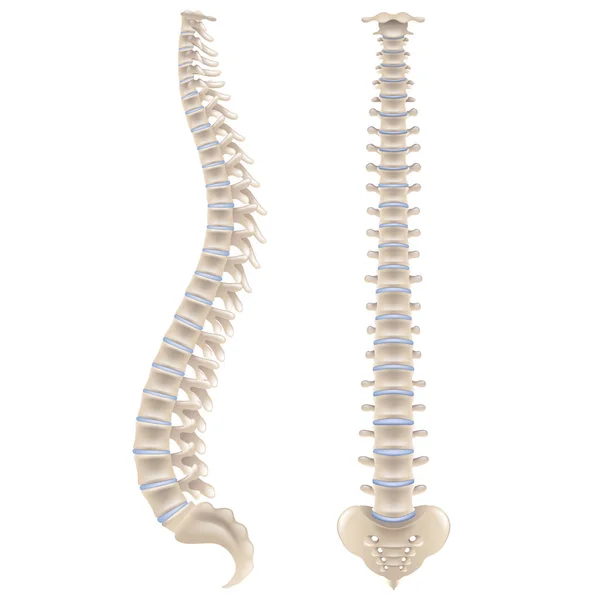
What is Degenerative Scoliosis (aging)?
Degenerative scoliosis is a pathology associated with the progressive wear and tear of the structures that connect the vertebrae to each other (discs, ligaments, and joints). It generally affects the lumbar region, but can extend to the upper back. The vertebrae tend to slip over each other, causing an ‘S’ shape deformity of the spine and making full alignment in an upright position difficult. This condition is frequently associated with lumbar spinal stenosis.
Evolution of Degenerative Scoliosis (aging)
Degenerative scoliosis is a spine disease that appears in the second half of life. The worsening is slow and progressive, but the symptoms become disabling in older people.
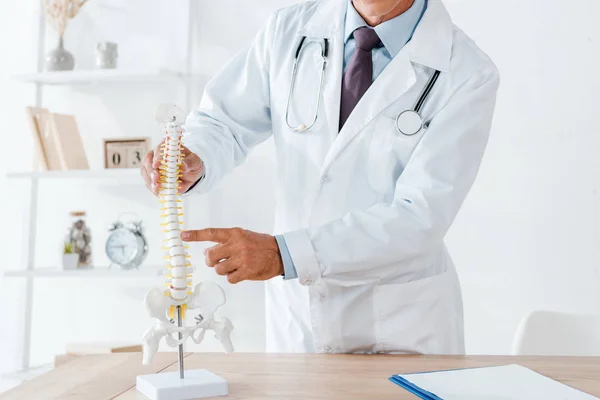
SYMPTOMS
> Pain in the lower back region that progressively increases during walking.
> Feeling of exhaustion in the back, which appears during short-distance walks.
> Difficulty in standing completely upright when walking or standing.
> In some cases, a feeling of blockage in the lumbar region when performing certain movements, especially rotations.
TESTS
Degenerative scoliosis is easily diagnosed by comprehensive X-rays that show the entire spine. It is important not to analyze isolated sections only, but to obtain a global view. Computed tomography of the lumbar spine allows assessment of disc wear, the progression of osteoarthritis, and possible compressions of the nerve roots (lumbar spinal stenosis). Finally, magnetic resonance imaging helps identify particularly painful disc changes (inflammatory discopathies) and better guide the treatment.
Treatment Possibilities
Treatment Options for Degenerative Scoliosis (aging)
Maintaining the abdominal and paraspinal musculature is essential to prevent spinal deformities and treat back pain. When pain arises, medical treatment includes analgesic and anti-inflammatory medications, and massages or infiltrations.
Principles of Surgical Treatment
Criteria for Degenerative Scoliosis Surgery (aging)
> Neutralize movements in the arthritic areas (arthrodesis) to relieve low back pain.
> Align and rebalance the spine to reduce muscle tension, responsible for pain and fatigue during walking.
> Free compressed nerve roots, in cases of associated lumbar spinal stenosis, to treat sciatica and regain strength in the legs.

Surgical Procedure
The Surgery
The surgeon must define a strategy that offers the patient the best results with the least possible impact. In the case of degenerative scoliosis, the risk is treating only the compression of the nerve roots, without considering the global deformation of the spine, which is the cause of all other symptoms. Thus, surgery can be performed in one or two successive interventions, depending on the case. The spine will be stabilized with metal implants (osteosynthesis), placed through the back or abdomen, with the goal of correcting the spine and blocking pain-generating movements (arthrodesis). If lumbar spinal stenosis is present, laminectomies may be necessary. Safety during surgery is optimized by monitoring the spinal cord and, if necessary, by the presence of a vascular surgeon in procedures performed through the abdomen.
One of the techniques I use most for the treatment of this pathology is Lumbar Fusion
POST-OPERATIVE CARE
The first time the patient gets up occurs on the day after the intervention. The physical therapist teaches essential movements, such as standing up, lying down, picking up objects from the floor, and performing personal hygiene. A custom-molded plastic brace is necessary in the first weeks and should only be used during movements. Hospital discharge occurs 4 to 7 days after the surgery, either directly home or to a rehabilitation center, with ambulance transportation. The rehabilitation program includes multidisciplinary care (rehabilitation doctor, physical therapist, occupational therapist), focusing on pain management, recovery of autonomy, and learning proper postures.
CONVALESCENCE
At home, the ideal rhythm combines rest in a comfortable position (semi-reclined, with the backrest inclined at 45º and the legs slightly bent) with light walking on flat surfaces, initially for 10-15 minutes, which can reach 1-2 hours. Starting from the 2nd or 3rd month, daily activities can be gradually resumed, respecting the limits imposed by pain. Recurrences of pain during convalescence generally result from excessive exertion and tend to disappear with rest.
Physiotherapy continues at home, starting with massages on the scar and painful or tense areas, followed by re-education exercises to stretch and strengthen the spine and lower limbs. The brace is removed after 3 months, allowing the return to driving, light load lifting, and domestic activities. Sports activities can be resumed between the 3rd and 6th month, starting with endurance exercises, such as cycling, swimming, or gym.
In the long term, there are no specific contraindications for a normal active and sports life.
Frequently Asked Questions
What is degenerative scoliosis?
Degenerative scoliosis is a lateral curvature of the spine that develops in adults, usually after the age of 50, due to the natural wear and tear of the intervertebral discs and facet joints. This wear and tear can lead to a tilting or rotation of the vertebrae, resulting in a “C” or “S” curvature in the spine.
What are the most common symptoms?
Symptoms include chronic back pain, stiffness, loss of flexibility, postural imbalance (such as misaligned shoulders or hips), and, in advanced cases, nerve compression that can cause weakness or tingling in the legs.
What are the causes of degenerative scoliosis?
The main causes are the natural aging of the spine, osteoarthritis, osteoporosis, and repetitive microtrauma over the years. Activities that overload the spine, such as heavy manual labor, can also contribute to the development of the condition.
How is the diagnosis made?
The diagnosis is made through physical examination, analysis of medical history, and imaging tests, such as X-rays and magnetic resonance imaging, which help to identify the curvature and evaluate the degree of spinal degeneration.
What are the available treatment options?
The treatment aims to alleviate symptoms and improve quality of life. Options include physical therapy to strengthen back muscles, medication for pain control, and, in more severe cases, surgery to correct the curvature or decompress compressed nerves.
Can degenerative scoliosis worsen over time?
Yes. Without adequate treatment, the curvature can progress, leading to increased pain, greater stiffness, and potential neurological complications due to nerve compression.
Is surgery always necessary?
No. Surgery is considered when conservative treatments do not provide adequate relief or when there are significant neurological symptoms. The decision depends on the severity of the curvature, the symptoms, and the patient’s overall health.
Is degenerative scoliosis common in the elderly?
Yes. Studies indicate that over 60% of adults aged over 60 have some degree of degenerative scoliosis, often associated with back pain and functional limitations.
What are the risk factors?
The main risk factors include aging, family history of spinal problems, osteoporosis, jobs requiring repetitive physical exertion, and a sedentary lifestyle.
How can the progression of degenerative scoliosis be prevented or delayed?
Maintaining an active lifestyle, practicing exercises that strengthen the back and core muscles, adopting correct postures, and having regular medical evaluations can help prevent or delay the progression of degenerative scoliosis.